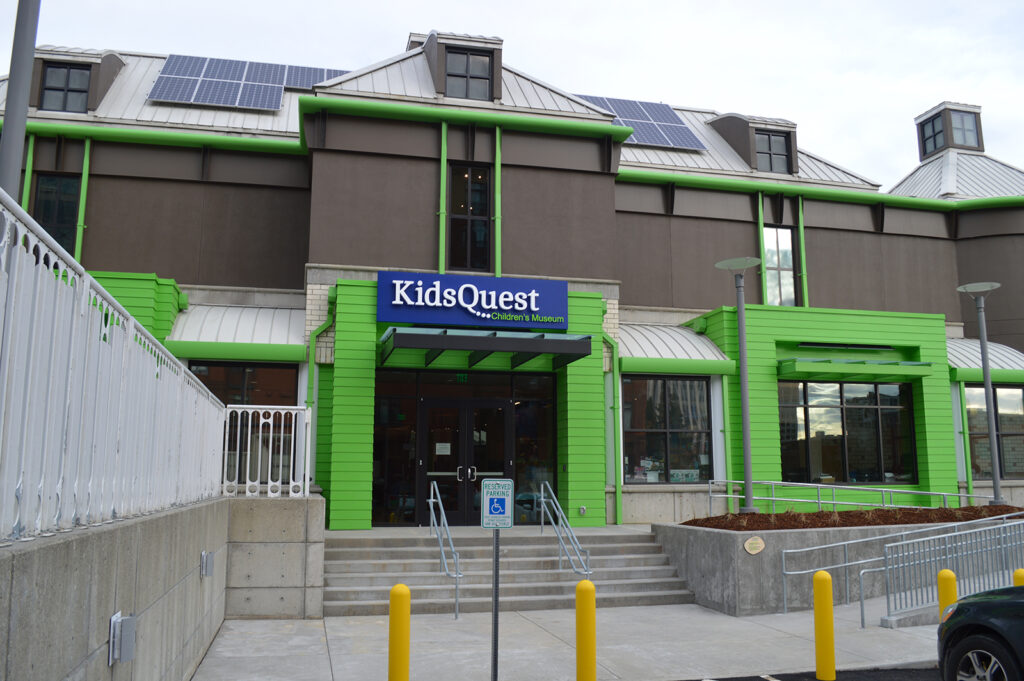
Hosted by KidsQuest Children’s Museum | Facilitated by Kalika Curry & Angela Phan
In a time of shrinking resources and growing needs, leaders across Eastside communities gathered to explore how we can do more with less—and do it together. Session 1 of the Strategic Cuts & Mutual Aid series focused on systems thinking, shared resources, and the power of collective impact to support youth and families.
Making More Out of Less: A Shared Vision
The session opened with a grounding question: How do we spread the work so that people can do what they’re best at—with support? This theme echoed throughout the conversation, emphasizing collaboration over isolation, and creativity over scarcity.
- Philanthropic partner Cathy Habib highlighted the need for data in philanthropic spaces, naming the frustration but also the importance of stating this reality.
- Organizational partner Katy Philips, Executive Director, Lake Washington School foundations celebrated the success of ParentMap Parent Talks, a model for engaging families.
- Education focused Organizational Partner Ricardo Macias Tamez uplifted Pizza with a Purpose and the Noticias program, thanking Eastside Pathways for enabling cross-sector connections that prevent siloed efforts.
Funding & Resource Gaps
Participants shared sobering realities about funding disparities and structural reductions:
- Bellevue Schoool District is facing a lack of assistant principals in elementary schools—key roles for discipline and support for students with disabilities.
- Immigration-related fears are keeping students out of school, with ICE concerns and unmet basic needs impacting attendance.
- Lake Washington School District paid off student lunch debt post-COVID, but concerns remain about families opting out of free/reduced lunch forms, leaving needs invisible.
- Care Solace, a mental health resource, is underutilized due to lack of awareness and integration.
- Lake Washing School Foundation offers webinars with trained counselors for a $10 donation—an example of a geographically limited resource that could be shared more broadly.
Systems Thinking: The Iceberg Model
Using the iceberg framework, participants examined high school graduation and basic needs through multiple lenses:
Event Level
- Person dependent and/or one-time solutions like debt forgiveness (e.g., $15K paid off by LWSF) are helpful but not sustainable.
Patterns of Behavior
- Persistent student food debt (e.g., $100K in BSD for 2024–2025).
- Food insecurity remains a barrier to school engagement.
- Policy changes are slow to socialize, leaving many underserved.
- Communication gaps prevent full awareness of available resources.
Structures
- COVID-era universal free lunch policies have ended.
- Students carry lunch debt post-graduation.
- Reductions in staff and services (e.g., assistant principals, disability support) are impacting capacity.
- The first cohort of children born during COVID entered kindergarten this year—long-term impacts are still unfolding.
Mindsets & Beliefs
- A shared sense of fear, scarcity, confusion, and despair is present across sectors.
- Despite this, there is enthusiasm for Collective Impact as a strategy to align efforts and maximize local resources.
Shared Values
Participants reaffirmed that the following are basic human rights:
- Belonging
- Basic Needs
- Education
- Co-regulation
Looking Ahead
Eastside Pathways backbone staff will continue to convene this short series of meetings to map resources, increase awareness, advocate for structural support, coordinate services, and identify areas our partners are ready to leverage a Collective Impact Funding.