Co-Developing Eastside Pathways’ 2027–2030 Strategic Plan
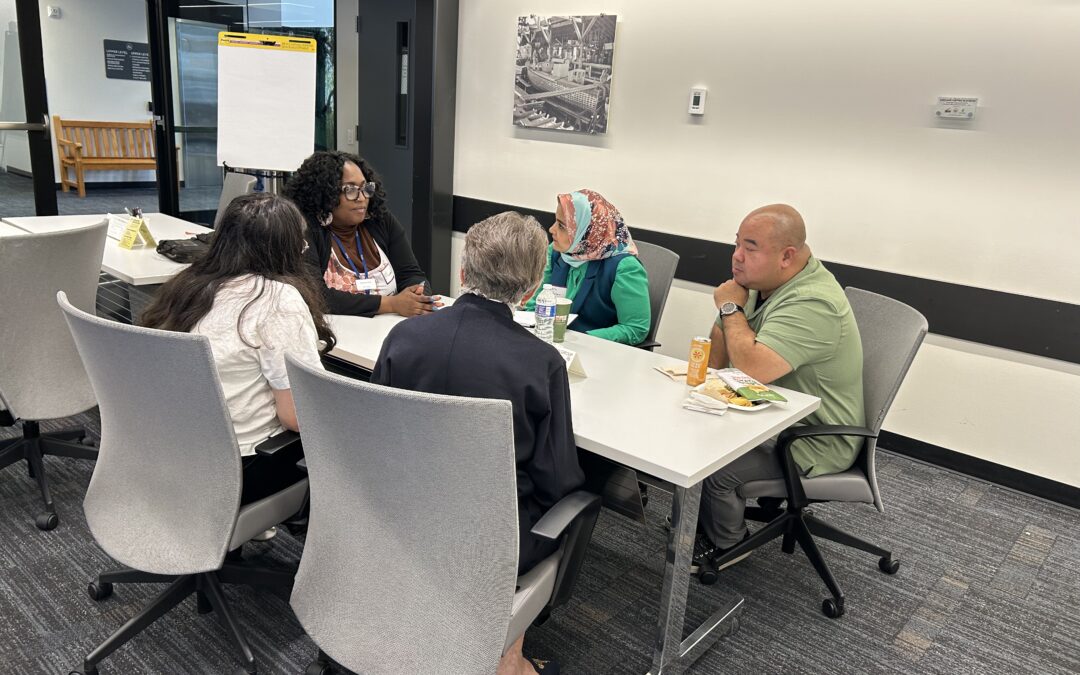
Eastside Pathways has begun a three-part strategic planning process to co-develop our Partnership’s 2027–2030 Strategic Plan. Over the course of three sessions, partners will move from reflecting on where we are today and what we have learned, to identifying where our priorities, interests, and capacities converge, and ultimately determining the outcomes we are collectively prepared to pursue.
And the word co-develop matters.
Collective Impact is built on the reality that complex, systemic challenges such as poverty, educational inequity, behavioral health, climate change, and barriers to opportunity cannot be solved by isolated initiatives or individual organizations working in silos. Our next strategic plan therefore cannot simply be a list of priorities developed by the Eastside Pathways backbone and presented to partners. It must reflect what we, as a Partnership, are positioned and committed to accomplish together.
Our goal is not only to develop SMART goals. We are looking for the places where community priorities, partner interests, organizational capacity, resources, influence, and opportunity converge. Those are the places where collective action can add value beyond what any one organization can accomplish on its own.
“The whole system created the problem, so the whole system has to try and fix it.”
15 Years of Collaboration
The timing of this planning process also happens to coincide with Eastside Pathways’ 15th anniversary, giving us an especially useful opportunity to look backward as we plan forward. In our first session, stories from across the Partnership reminded us that systems change is often a long game. Strategies evolve. Champions change. Leadership turns over. Funding and political environments shift. What matters is whether the relationships and infrastructure exist to help effective strategies take root, change hands, adapt, scale, and endure.
One story shared in the room captured that lesson particularly well: Pizza with a Purpose.
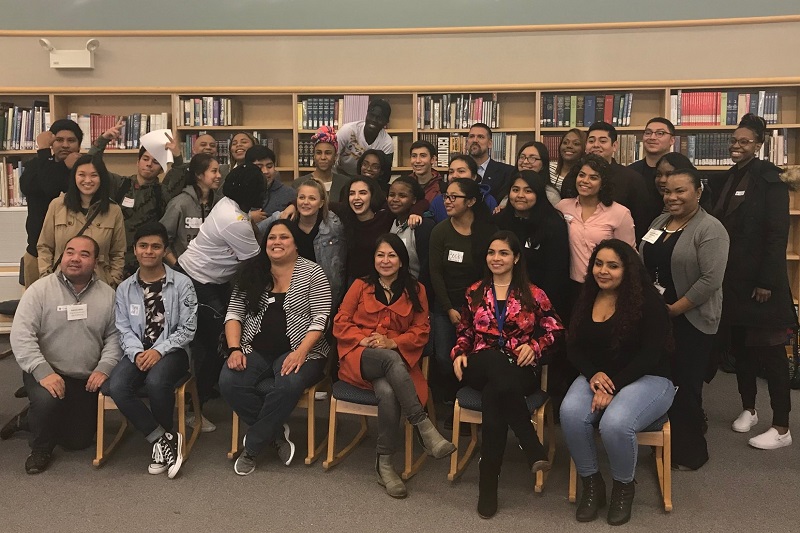
As people around the room reconstructed its story, something powerful became visible. Some of the leaders knew one another when the work began. Others entered the story years later. They played different roles in developing the strategy, championing early adoption, expanding participation, and eventually sustaining and scaling a broader suite of supports.
The people changed. Leadership changed. Budgets changed. Five different superintendents have served during its life. Political perspectives on targeted strategies have shifted. Yet the work continued.
That is worth pausing on.
The success is not simply that an initiative lasted 13 years. The success is that ownership of the work could change hands without the work disappearing.
Capacity for Change
That is part of what Collective Impact infrastructure makes possible.
When a strategy is held within a partnership, supported by backbone infrastructure, strengthened through relationships, and eventually embedded within institutions, it becomes less dependent on a single champion. New leaders can enter. Early adopters can make room for later adopters. Organizations can take on different roles as their capacity changes. What began as an idea or individual effort can become a sustained, systems-level approach.
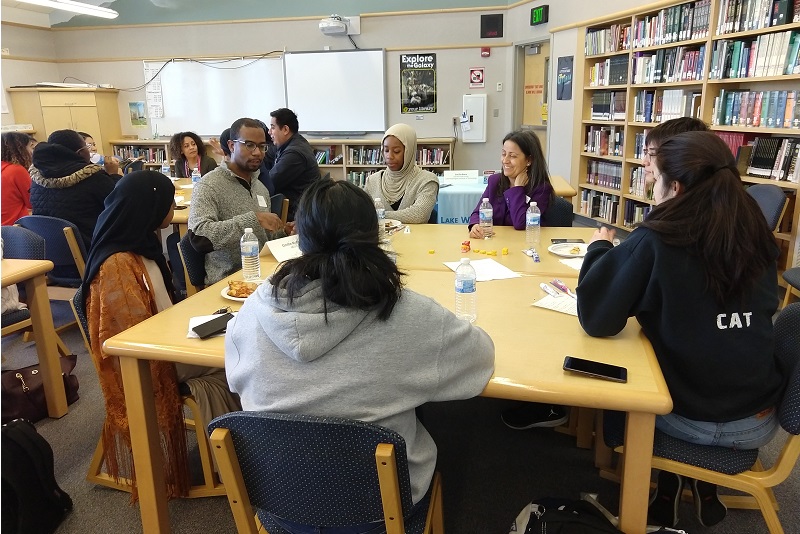
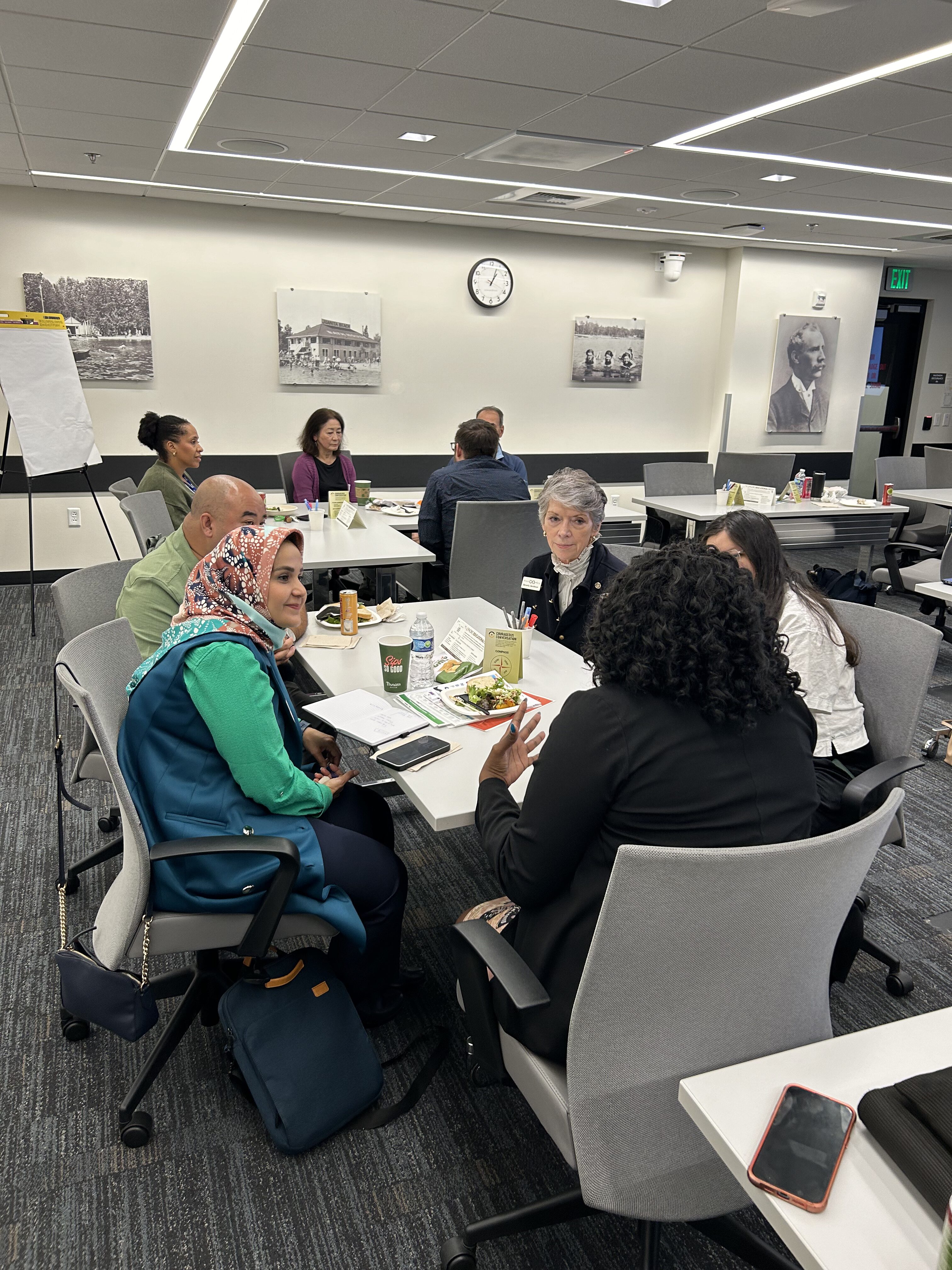
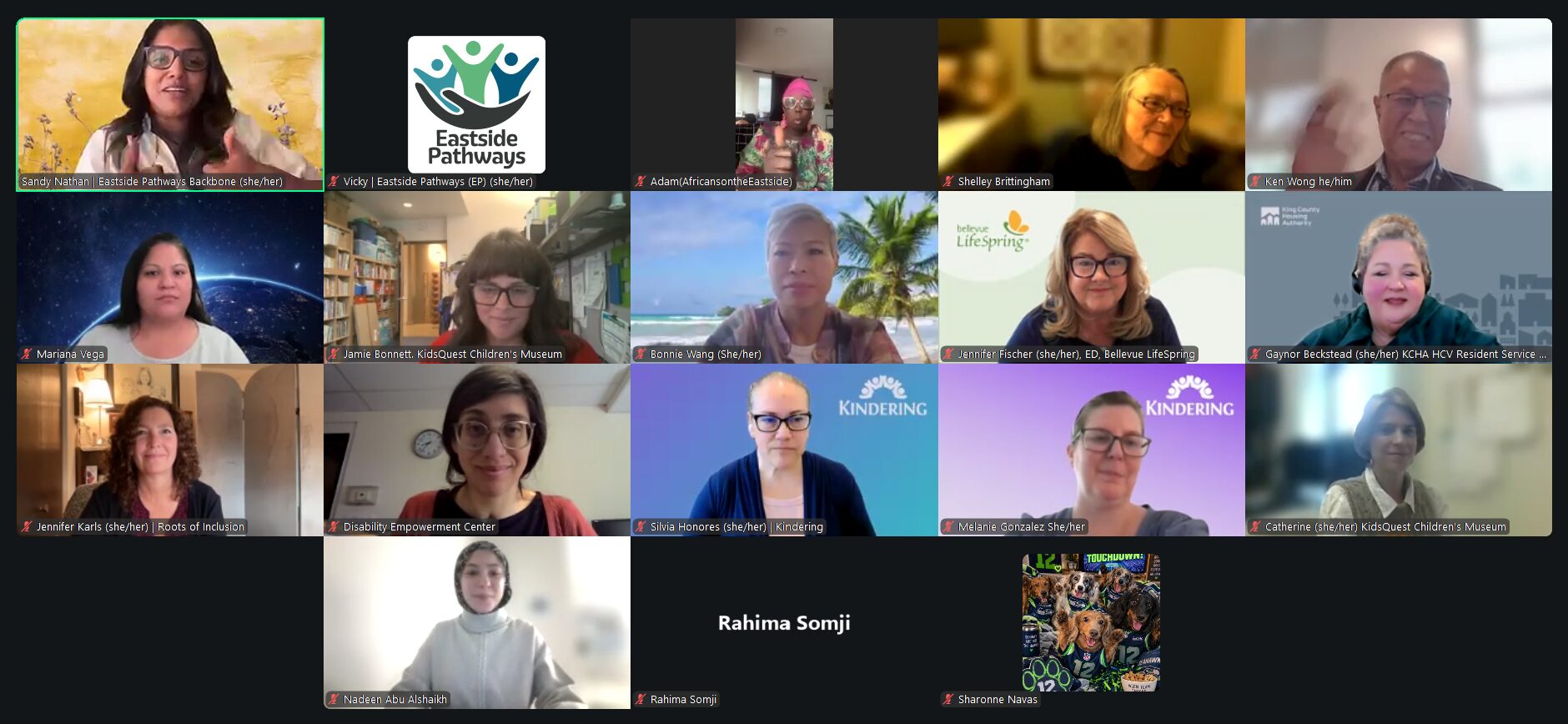
The Session 1, virtual and in person, conversations surfaced other examples of this same long-game pattern.
Partners reflected on early learning expanding across schools; mental and behavioral health collaborations growing from relationships into coordinated strategies; parent and family voice becoming more integrated into institutional decision-making; culturally and linguistically responsive communications emerging during COVID and continuing afterward; and food-security efforts evolving as policies, needs, and community conditions changed.
In each case, the important question wasn’t simply, “Did we launch something?”
It was:
- Did it take root?
- Did others adopt it?
- Could it survive a leadership transition?
- Could it respond when conditions changed?
- Could it move from an individual champion to institutional ownership?
- Could we scale what worked without losing the community relationships that made it work in the first place?
Those questions feel especially important as we co-develop our 2027–2030 Strategic Plan.
Strategic Action
From SMART goals to sustainable collective goals
Of course, our new strategic plan needs SMART goals. But our Session 1 conversations reminded us that being specific and measurable is not enough. We are looking for goals where community priority, partner interest, organizational capacity, institutional authority, resources, and opportunity converge.
In other words, we aren’t simply asking: What should Eastside Pathways do next?
We’re asking: What are we collectively positioned to change?
And, perhaps just as importantly: What can we build together now that someone else can carry forward five, ten, or even thirteen years from today?
That is the long game.
Our Common Agenda
Collective Impact recognizes that complex, systemic challenges cannot be solved through isolated programs or by individual organizations working in silos. Progress requires different actors to take different roles over time, while remaining anchored to a common agenda and shared accountability.
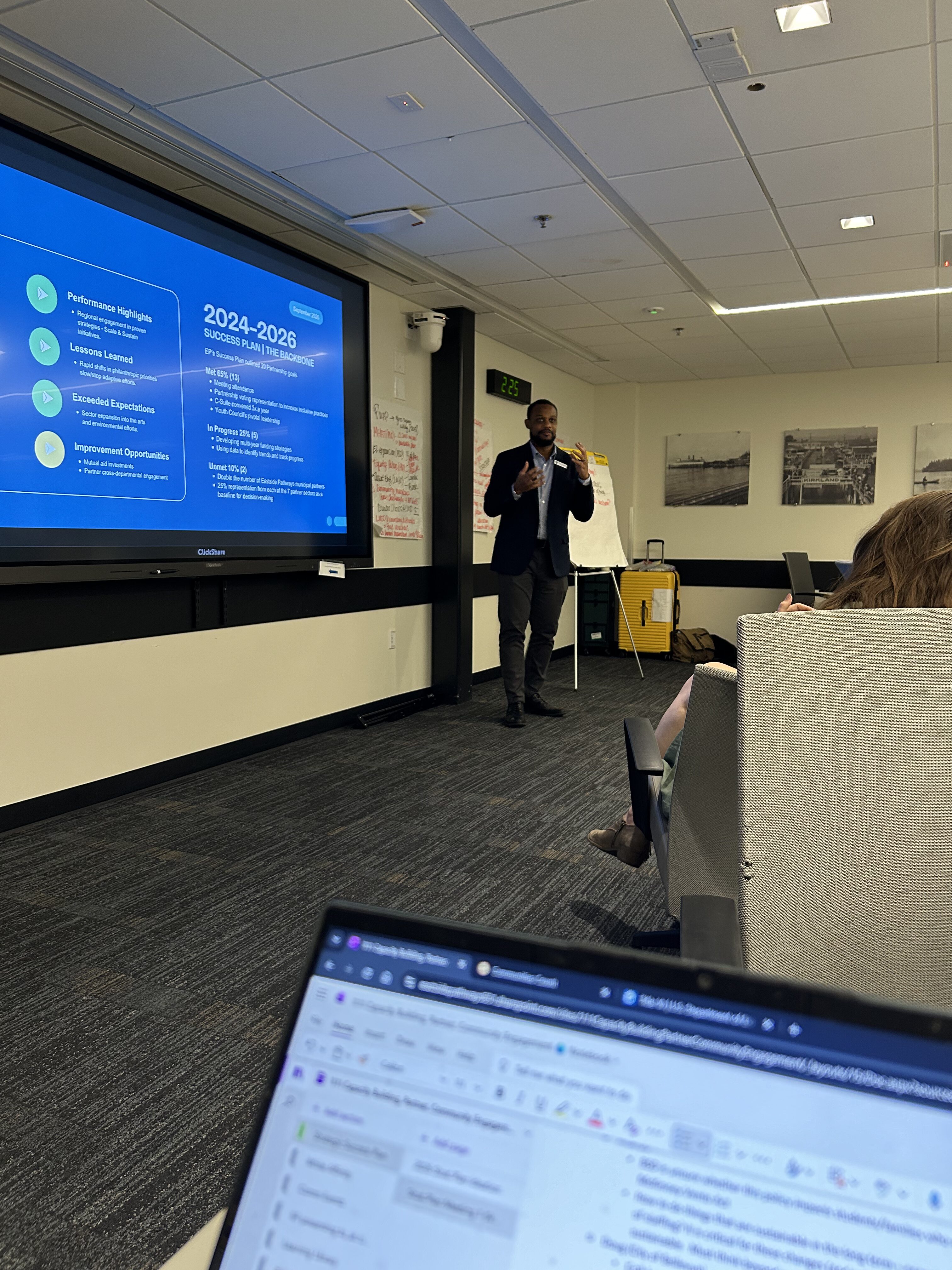
That is also why role clarity between the Eastside Pathways backbone and the Eastside Pathways Partnership became such an important part of our first strategic planning conversation.
The backbone helps provide the infrastructure for collective work through Guidance and Strategy, Convening and Facilitation, Data and Shared Measurement, Public Will and Fundraising, and Administrative Infrastructure.
Partners bring Commitment to a Common Agenda, On-the-ground Execution, Shared Accountability, and Community Leadership.
Neither replaces the other.
And sustainability happens when the work becomes bigger than either one.
Our backbone capabilities can also support organizations outside of collective initiatives. Eastside Pathways is available for hire to help individual organizations and coalitions strengthen areas such as strategy, facilitation, convening, community engagement, data, and collaborative infrastructure. Explore Eastside Pathways’ services.
Fifteen Years In, We Are Still Building
Celebrating 15 years has given Eastside Pathways many opportunities to look backward this year.
But perhaps the most meaningful way to honor those 15 years is to ask what they have taught us about the next 15.
We have learned that systems change rarely moves in a straight line.
People come and go. Organizations change leadership. Budgets grow and contract. Policy environments shift. Community needs evolve. Sometimes a strategy moves quickly; sometimes it takes years for the conditions to be right.
Our job as a Partnership is not simply to create good ideas.
Our job is to create the conditions in which good ideas can become shared strategies, shared strategies can become sustained practices, and sustained practices can ultimately change systems.
- Session 1 helped us remember where we’ve been.
- Session 2 will help us understand where our capacity and interests converge.
- Session 3 will ask us to make choices about where we are collectively prepared to invest our time, talent, relationships, influence, and treasure.
Because the real measure of our 2027–2030 Strategic Plan won’t simply be what we put on paper.
It will be what our community is still benefiting from long after the people who first imagined it have handed the work to someone else.
Make sure your voice is at the table.
Session 2: October 27th, 2026
Session 3: November 5h, 2026 (In Person)